What did Google announce on November 9?
On Monday, November 9, 2026, Google introduced TPU 8tx and TPU 8i Max, two new members of its eighth generation of tensor processing units. In its launch post, Google calls the pair "our newest TPUs" built "for the agentic era" and says it is the first time it has introduced four TPU systems in a single year. TechCrunch reported the launch on November 10, and Arm published its own announcement the same day covering the CPU side of the design.
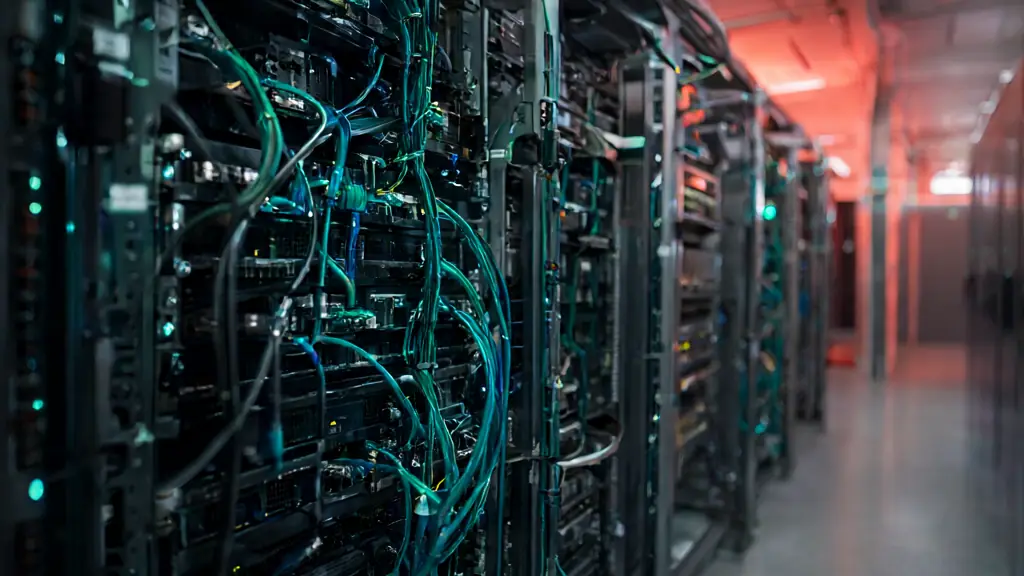
Illustrative: the kind of physical compute campus these chips ultimately live in.What is TPU 8tx for?
TPU 8tx is aimed at secure and confidential inference, with Google also calling it "great for small-scale training." It uses the same silicon as TPU 8t, paired with 5th Generation AMD EPYC CPU hosts. Google positions it for regulated enterprises and governments, including fine-tuning on private data and reinforcement learning on a single system. The headline performance claim is "up to 2x lower latency compared to TPU 8t with a near-zero performance penalty," in the context of multi-step agents.
What does TPU 8i Max change?
TPU 8i Max combines two TPU 8i chips onto one package. Google says it delivers "double the compute, double the SRAM and double the HBM bandwidth of TPU 8i," and fits twice the silicon into the existing rack footprint. Google aims it at "massive context windows and the highest compute density per rack." Arm's announcement adds that Arm-based Google Axion CPUs serve as host compute for TPU 8i Max. Arm quoted Mark Lohmeyer, VP and GM of AI and Computing Infrastructure at Google Cloud: "Delivering AI performance at scale requires co-designing CPUs and accelerators to work seamlessly together."
What did Google leave out?
Google published no price for either chip and no general availability date. It did not name any customers for these two chips, although it says its TPUs have "nearly 100 customers, including frontier labs, trading firms, retailers, universities, and more." Every new comparison in the announcement is against Google's own earlier chips. The closest benchmarks we have come from the April launch of TPU 8t and TPU 8i, which Google describes as up to 2.7 times better training performance and 80% better inference price performance than its previous generation.
What it means for solo operators and marketers
Most of you will never buy a TPU. You will use one indirectly, through a cloud platform, an AI vendor, or a tool running on Google Cloud. That is the only path by which this news reaches your budget. The chips matter because they target the expensive part of agent work: long, multi-step runs that research a campaign, pull data from several systems, and check their own output. When the compute under those runs gets cheaper per finished task, the tools on top eventually pass some of that saving along, usually later than the press release implies.
The regulated-industry angle deserves attention. If you serve healthcare, finance, or public-sector clients, a secure inference option that keeps sensitive data inside a confidential boundary can decide whether an AI proposal gets a yes. TPU 8tx is pitched squarely at that buyer. For the earlier groundwork, read our piece on Google open-sourcing TorchTPU, which covers the software side of the same hardware bet, and our look at the agentic security shift that makes secure inference more than a marketing word.
Our take
Google is answering the agent cost problem and selling the answer partly as security. That is a smart pairing, because regulated buyers pay for assurance before they pay for speed. Our view is that a solo operator should not plan a 2027 workflow around TPU 8i Max pricing that does not exist yet. After more than 25 years in digital marketing, we have seen enough infrastructure launches to know the pattern: the keynote arrives first, the price sheet arrives later, and the small shops get the discount only after the enterprise buyers have set the market. Watch for three things: a published price per hour or per million tokens, a general availability date, and which of your current AI vendors announce they are switching to these chips. Until then, measure what your agents cost per finished task and keep your workflows portable across providers. Local options matter too, as our Apple M6 Mac coverage shows, because the cheapest inference is the one you never send to a data center.